How to do a reverse lunge
A reverse lunge is a single-leg move where you step one foot back and lower your back knee toward the floor. It strengthens your quads and glutes and is often easier on the knees than a forward lunge.
- Lower body
- No equipment
- 12 reps
backward lunge, step-back lunge, rear lunge
How to do it
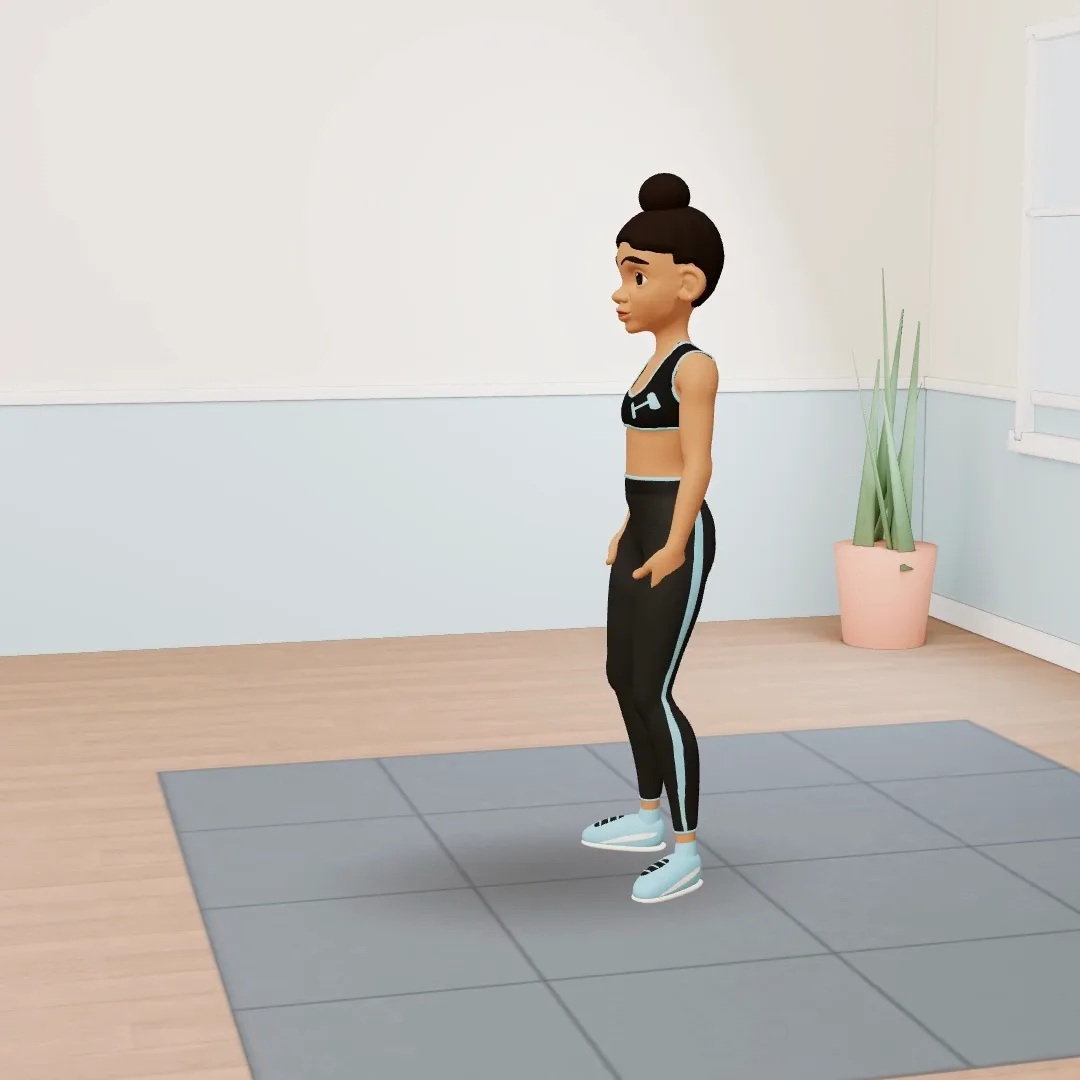
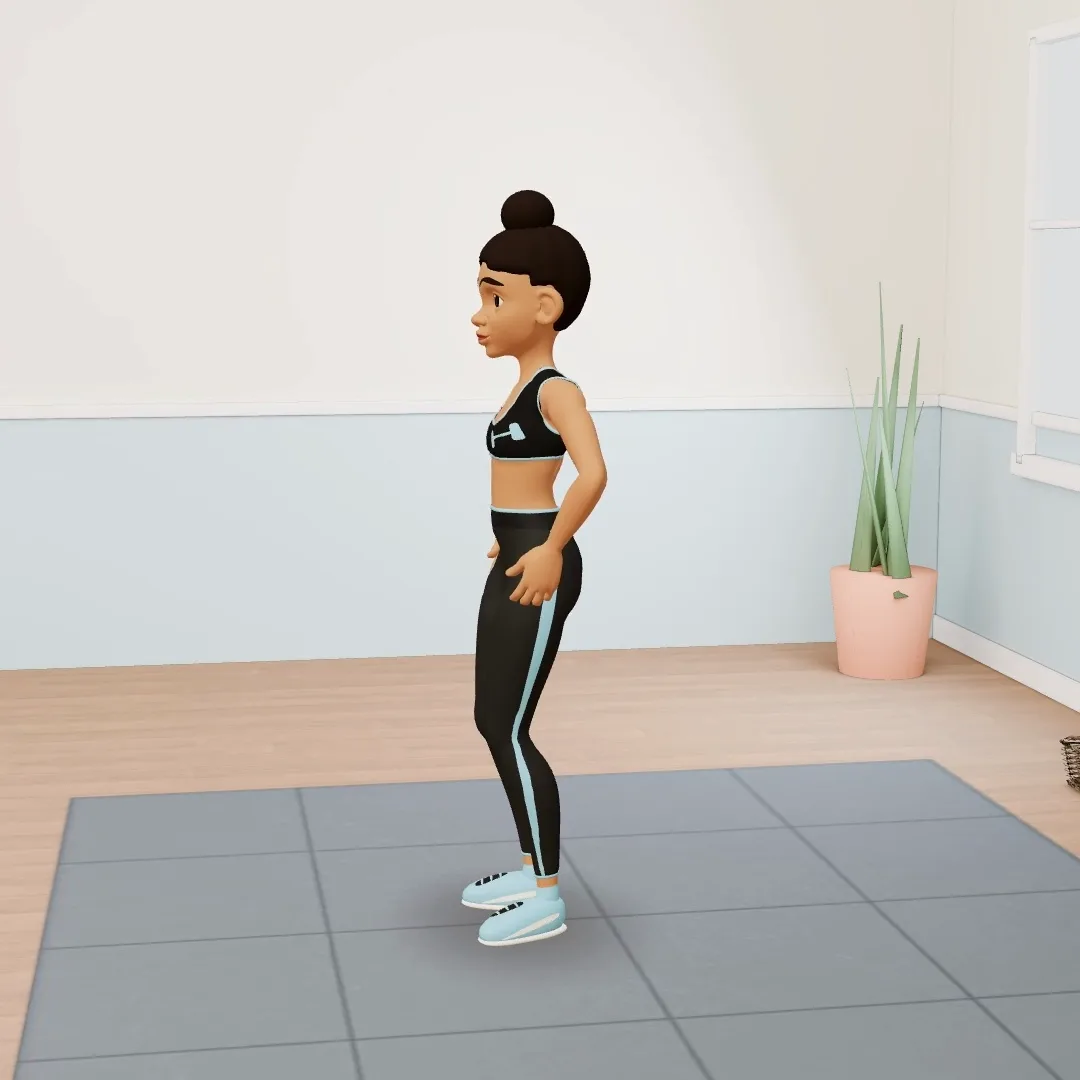
- Stand tall with your feet hip-width apart and your hands on your hips.
- Take a long step back with your right foot and land on the ball of the foot.
- Bend both knees to lower straight down until your back knee almost touches the floor.
- Keep most of your weight in the front heel and your chest up.
- Push through your front foot to bring your right foot back to standing, then switch legs.
Form cues
- Step back long
- Back knee almost to the floor
- Push through your front heel
Muscles worked
Main: quads, glutes
Also: hamstrings, core, calves
Common mistakes
- A short step that puts the front knee far past the toes. Fix: Step back far enough that your front shin stays close to vertical at the bottom.
- Front knee caving inward. Fix: Keep your front knee in line with your second and third toes.
- Feet on one line, like a tightrope. Fix: Keep your feet hip-width apart, as if on two rails.
- Pushing off mostly with the back foot. Fix: Drive through the front heel to stand up.
Make it easier: Assisted reverse lunge
Hold a chair or wall with one hand and lunge only as deep as is comfortable.
Make it harder: Reverse lunge to knee drive
As you stand, drive the back knee up to hip height and balance for a moment before the next rep.
In a workout
Do 12 reps per set, alternating legs, for 2-4 sets.
Safety: If you have knee pain or poor balance, hold a support and lunge less deep, and stop if you feel sharp knee pain.
Questions
Are reverse lunges better than forward lunges?
Not better, but often easier to control. Stepping back keeps your weight over the front foot, which many people find kinder to the knee.
What muscles do reverse lunges work?
Mainly your quads and glutes, with your hamstrings, calves and core for balance.
Should my back knee touch the floor?
Bring it close to the floor without banging it down. A light touch on a mat is fine.