How to do a march in place
Marching in place means lifting one knee at a time while you swing the opposite arm, without moving forward. It is a low-impact way to raise your heart rate and wake up your hips and legs.
- Warm-up
- No equipment
- 30 reps
marching in place, high knee march, standing march
How to do it
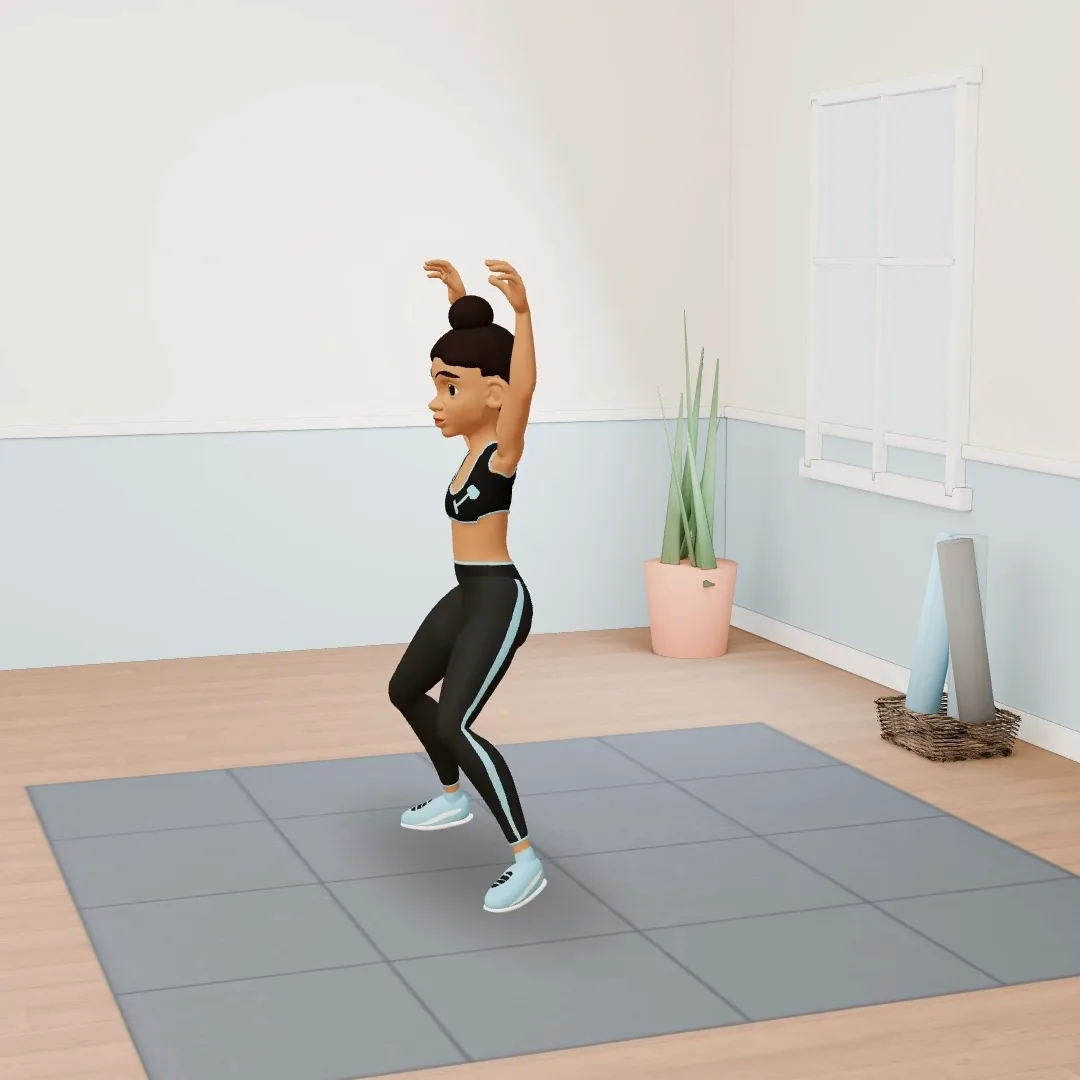
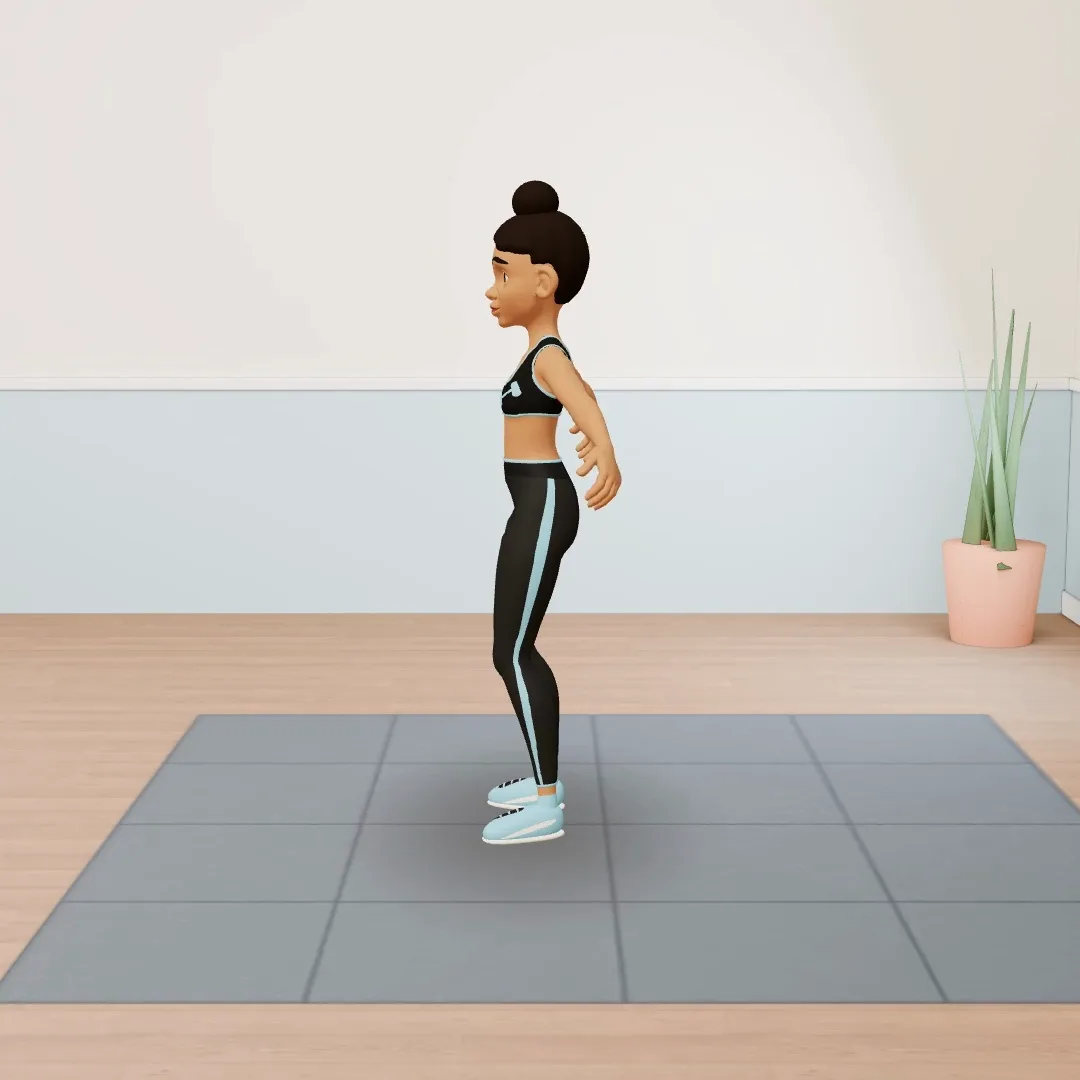
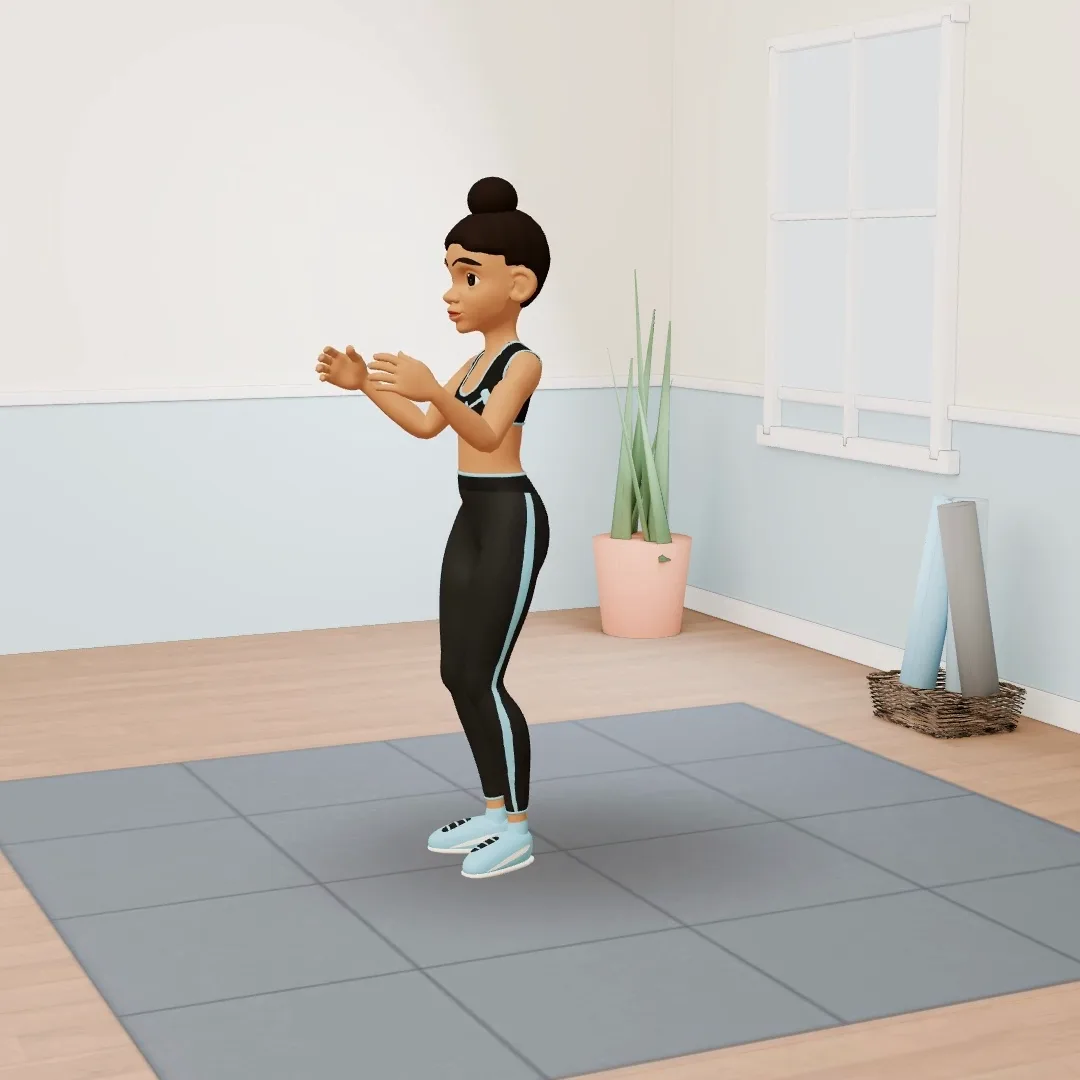
- Stand tall with your feet hip-width apart and your arms bent at about 90 degrees.
- Lift your right knee up toward hip height as your left arm swings forward.
- Place your right foot down softly on the ball of the foot.
- Lift your left knee as your right arm swings forward.
- Keep alternating at a steady pace, with your chest up and your eyes forward.
Form cues
- Lift your knees high
- Swing your arms
- Stand tall, do not lean back
Muscles worked
Main: hip flexors, heart and lungs
Also: quads, calves, core, glutes
Common mistakes
- Leaning back to lift the knee higher. Fix: Keep your chest over your hips and lift only as high as you can while you stay tall.
- Shuffling the feet with small knee lifts. Fix: Aim each knee toward hip height so the hips really work.
- Keeping the arms still. Fix: Swing the opposite arm with each knee, like you walk briskly.
Make it easier: Slow march with support
Hold a chair or wall with one hand and march slowly with lower knee lifts.
Make it harder: High knees
Turn the march into a light run in place and drive your knees up fast.
In a workout
Do 30 steps (15 per leg) as the first warm-up move, or march for longer at an easy pace between harder exercises.
Safety: Hold a wall if your balance is unsure, and stop if you feel hip pain, chest pain or dizziness.
Questions
Does marching in place count as exercise?
Yes. A brisk march raises your heart rate and works your hip flexors, and it is easy on the joints.
What is the difference between marching and high knees?
Marching is a walk with one foot always on the floor. High knees is a run in place with a short flight phase.
How high should my knees go?
Aim for hip height. If you lean back to get there, lift a little lower.